

Back in 2021 professional services network, Deloitte, made a prediction forecasting that women’s sport would soon generate more than $1 billion in annual revenue, declaring women’s sport as ‘ripe for monetisation’[1]. Just a few years later, that prediction had become reality, driven by record-breaking attendances, growing broadcast audiences and increasing commercial investment. While women’s sport has become one of the fastest growing sectors in the industry, the real opportunity for brands goes far beyond sponsorship.
Female athletes are no longer solely recognised for their performances within the game, and are now becoming household names, fashion icons and influential ambassadors that extend across sports and culture. For brands, it creates new opportunities to connect with audiences in authentic ways.
Women’s Rugby World Cup
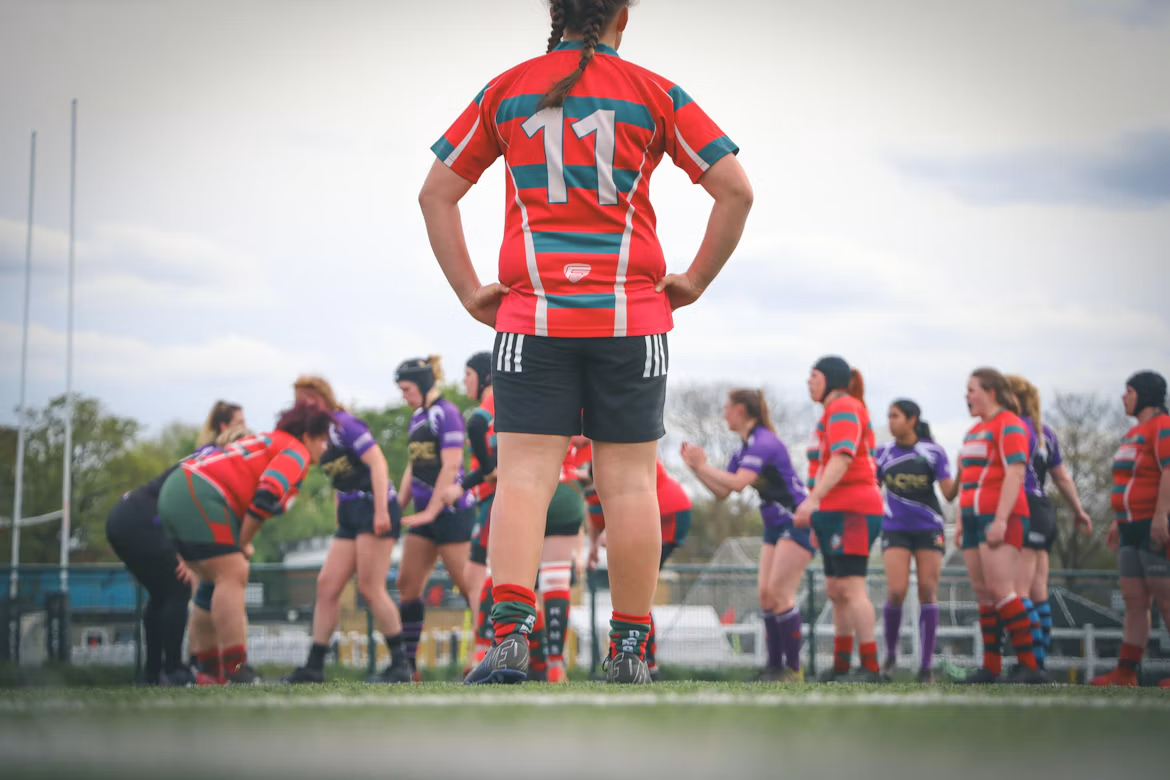
Barbie proved this with a standout campaign during the 2025 Women’s Rugby World Cup when they unveiled dolls inspired by four of the tournament’s biggest stars: Ellie Kildunne, Ilona Maher, Portia Woodman-Wickliffe and Nassira Konde. Barbie reinforced the idea that female rugby players are role models with influence beyond sport, introducing them to younger audiences while reinforcing their place in mainstream culture, all whilst addressing key social issues for women and girls in sport. The brand saw the hype women’s rugby was creating, by smashing sales and broadcast records, and capitalised on it. The success for partners is presented by the event generating £201 million in media revenue for the competition’s commercial partners[2].
View this post on Instagram
Women’s football
Women’s football provides another clear example of the demand for women’s sport at the highest level, and not just when it comes to international teams breaking records, but in the domestic leagues. Arsenal Women have consistently packed the Emirates Stadium for their Women’s Super League (WSL) games, regularly attracting crowds that surpass several of the men’s fixtures in recent seasons – even if that’s not much of challenge anymore! Something that was once considered ambitious has become expected, proving that supporters will turn out in huge numbers when women’s sport is given the biggest stages. The ability for the women’s team to sell out one of the largest premier league stadiums in the country, and to pack streets with crowds in the team’s jerseys or with their scarfs on the way to a fixture, proves to brands that women’s sport is worth investing in.
From performance to personal brand
View this post on Instagram
The same trend can be seen in tennis with sports star, Naomi Osaka, showing how athletes can shape conversations far beyond results. Her on-court outfits have become much more than a commentary note but now as fashion moments in their own right. Globally renowned brands, such as Nike, have seen their opportunity for a unique partnership, and ran with it. Fans aren’t just buying into her performances, but they’re buying into her personality and style.
Driving a new generation of fans
Motorsport is following a similar path. F1 has utilised its growing young female to grow F1 Academy, the women’s academy league. F1 Academy are tapping into this cultural reset, adopting these newly established female role models and the fact that those athletes have become a brand, bringing them into the world of women’s motorsport. England footballer, Ella Toone, partnering with Red Bull Racing and Red Roses icon, Ellie Kildunne, working alongside Alpine, were both involved in showcasing the championship, helping introduce F1 Academy to a demographic of fans who may never have engaged with motorsport before.
This is exactly why investing in women’s sport is so valuable. Brands are no longer reaching a niche audience, they are tapping into communities that span sport, fashion, entertainment and social media, where athletes are creating conversations every day. The brands and clubs creating stories are seeing the greatest return and it in finding meaningful ways to become part of a cultural moment or movement.
Women’s sport offers something increasingly difficult to achieve, authenticity through stories which connect people. Fans are responding to brands that invest meaningfully, whether that’s through storytelling, merchandise, grassroots initiatives or creating experiences and all at a time where these athletes want to do more than make a name for themselves.
If your brand is looking to create meaningful campaigns powered by the stories sport is emersed in, find out how Hatch can make that happen, by contacting us at hello@hatch.group.
[1] Deloitte, 2023
[2] Rugby World Cup, 2026